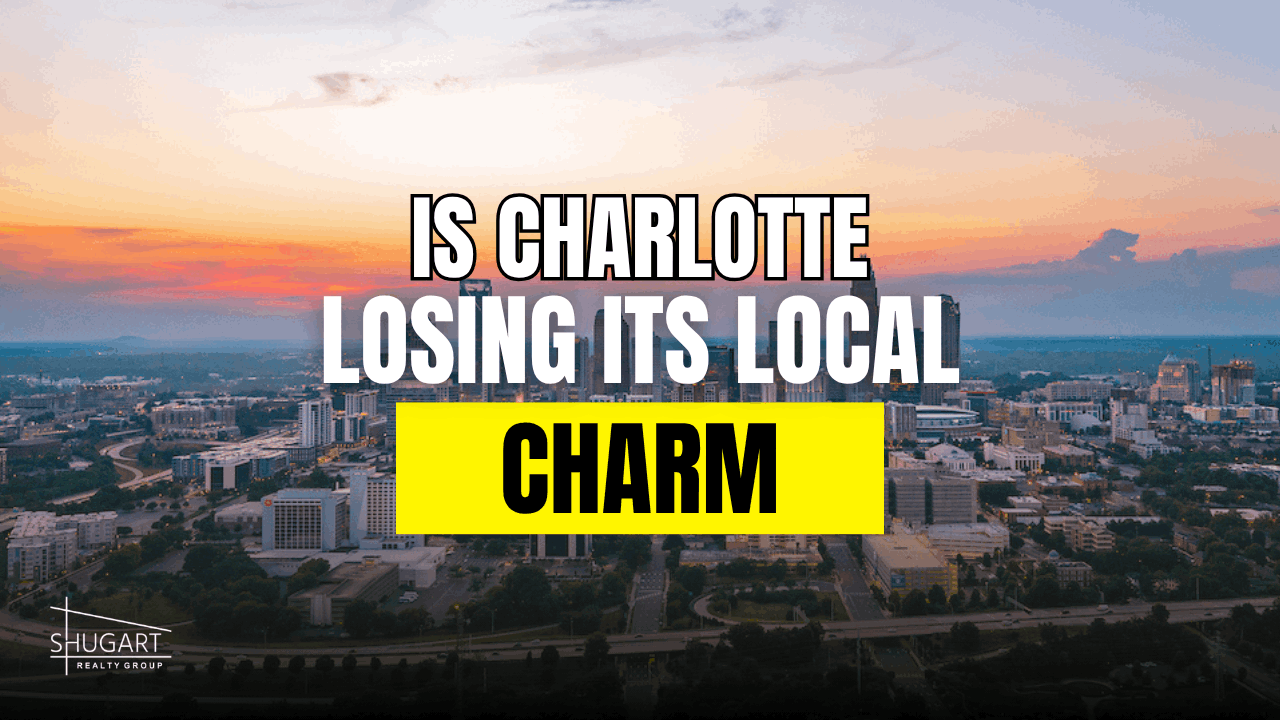
Is Charlotte Losing Its Local Charm?
Take a walk through South End or Plaza Midwood today, and you might notice something different. A few years ago, these neighborhoods were known for locally owned coffee shops, independent restaurants, boutique retailers, and businesses that gave each area its own personality. Today, while many of those local favorites are still here, they're increasingly sharing the streets with recognizable national names. Brands like Maman, PopUp Bagels, and other growing regional and national concepts are choosing Charlotte for their next locations. It's a sign of just how much our city has grown, but it also raises an interesting question.
Is Charlotte losing what made it unique, or is this simply what happens when a city becomes a major destination? The answer probably depends on who you ask.
Charlotte has been one of the fastest-growing cities in the country for years, and that growth isn't slowing down. According to the City of Charlotte, the city's population has grown from roughly 396,000 residents in 1980 to more than 877,000 by 2020, with development accelerating along corridors like South End, NoDa, Plaza Midwood, and Midtown. The neighborhoods closest to Uptown have experienced some of the most dramatic transformation. Between 2010 and 2020, portions of South End saw population growth of more than 220%, while the Commonwealth area near Plaza Midwood grew by approximately 223% as thousands of new apartments and mixed-use developments were built.
With that kind of growth comes new investment.
National retailers aren't choosing Charlotte by accident. They look for neighborhoods with increasing foot traffic, strong household incomes, walkability, and a growing population. South End alone is now home to more than 13,000 residents, nearly 20,000 employees, and over 5.5 million square feet of office space, making it one of the most attractive retail markets in the Southeast.
For many people, that's exciting. More restaurants. More shopping. More amenities. More places to gather. It's part of what makes Charlotte feel like a city that's stepping onto a much bigger stage. But growth also comes with trade-offs.
One of the biggest challenges facing locally owned businesses isn't a lack of customers. It's the cost of staying in the neighborhoods they helped build. The City of Charlotte's recent Small Business Ecosystem Assessment found that affordable commercial space has become increasingly difficult to find, particularly in high-demand areas like South End, Uptown, and NoDa. As demand for retail space continues to rise, so do lease rates, making it much harder for independent businesses to compete with larger companies that have greater financial resources. That's why many longtime Charlotte residents have started noticing familiar patterns.
A neighborhood develops its own identity through local businesses. More people discover it. New apartments and offices are built. National brands take notice. Commercial rents increase. Eventually, some of the smaller businesses that gave the neighborhood its character begin relocating or closing altogether. It's a cycle that's played out in cities across the country, and Charlotte is experiencing it in real time. From a real estate perspective, this evolution isn't necessarily good or bad. It's simply growth.
When national retailers begin investing in a neighborhood, it's often because they see long-term confidence in that area's future. That can support property values, attract additional investment, and create communities where people can live, work, and walk to restaurants, shopping, and entertainment. At the same time, many buyers still tell me they're looking for something authentic. They want neighborhoods with character. They want locally owned restaurants, unique coffee shops, and businesses that make Charlotte feel like Charlotte—not Anywhere, USA.
Finding the right balance between growth and preserving local identity may be one of the biggest conversations our city faces over the next decade. As someone who works in Charlotte real estate every day, I've watched these neighborhoods evolve firsthand. Every new business, every redevelopment project, and every investment tells us something about where the market is headed. The question isn't whether Charlotte will continue to grow. It will.
The real question is whether we can continue growing while holding onto the local character that made so many people fall in love with this city in the first place. What do you think?
Would you rather see more locally owned businesses in neighborhoods like South End and Plaza Midwood, or do you welcome the arrival of larger national brands?
Categories
Recent Posts
A 1947 Bungalow in One of Charlotte’s Evolving Neighborhoods
What’s Next for I-77? The September Vote Charlotte Residents Should Be Watching
Why Renting Might Be Smarter Than Buying Right Now

The Shugart Short List: Charlotte Drink Specials Worth Knowing This Weekend
South End Is Getting a New Hotel. Here’s Why That Matters for Charlotte.

Charlotte’s Aging Giants: Why So Many Trees Are Falling (And What It Means for Our City’s Future)
One City. Two States. Which Side of Charlotte Is Right for You?
Why Is Everyone Moving to Charlotte?
MECKLENBURG COUNTY'S TAX INCREASE WHAT IT MEANS FOR HOMEOWNERS & BUYERS

"My job is to find and attract mastery-based agents to the office, protect the culture, and make sure everyone is happy! "